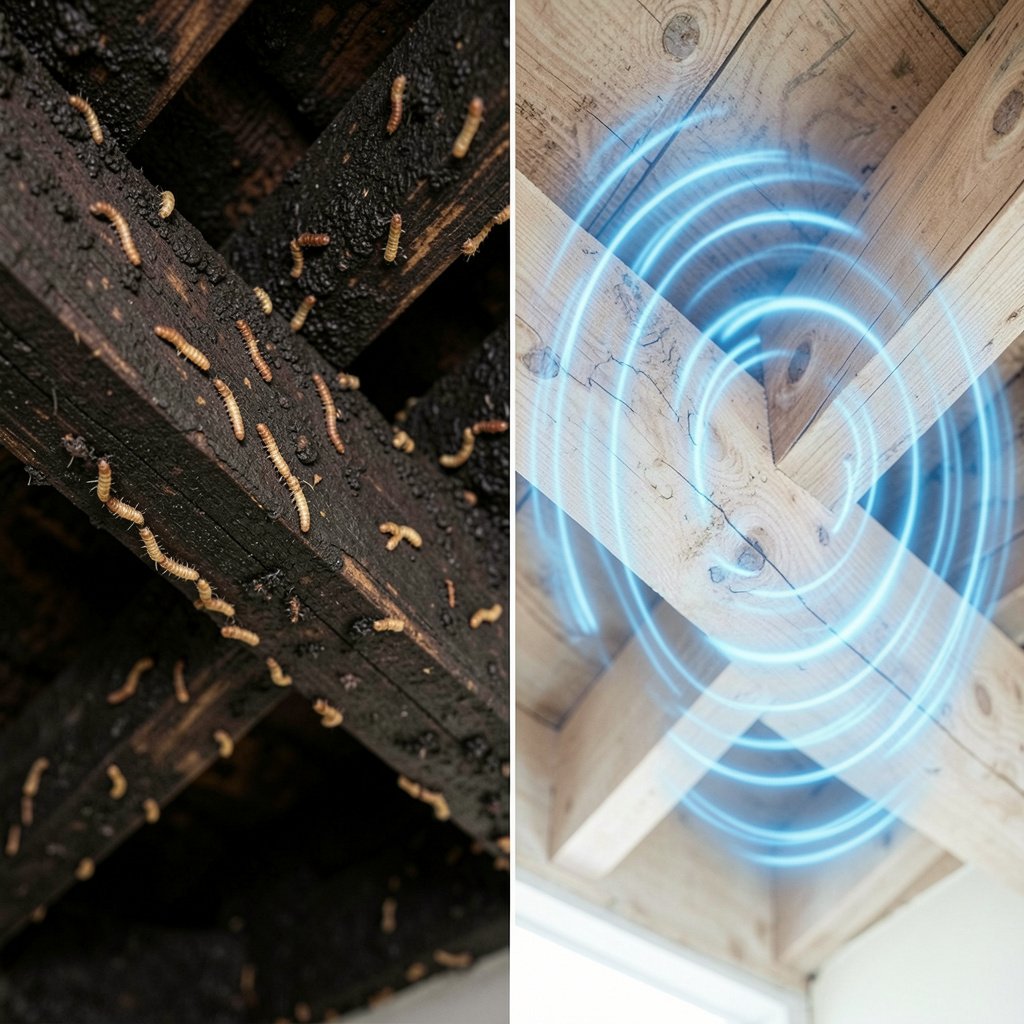
Discovering small holes in a wooden beam or noticing fine wood dust beneath furniture can be alarming. These are often the first visible signs of a woodworm infestation, and many homeowners immediately wonder how serious the problem is. While it’s natural to feel concerned, acting calmly and taking the right steps can help prevent further damage and protect your property.
Woodworms spend most of their lives hidden inside timber, so the damage they cause is often invisible until an infestation has become established. Fortunately, modern treatment methods make it possible to eliminate active wood-boring insects without relying solely on traditional chemical treatments. Shashel uses advanced microwave technology to target pests hidden deep inside wood while helping preserve the timber itself.
First, Don’t Panic
Finding evidence of woodworms does not necessarily mean your home is in immediate danger.
Many infestations develop slowly over several years, giving homeowners time to assess the situation and choose the most appropriate treatment.
The important thing is to avoid ignoring the signs or making assumptions before the infestation has been properly evaluated.
Learn to Recognize the Signs
Woodworm activity often begins quietly.
Common signs include:
- Small, round exit holes in timber
- Fine wood dust (frass) beneath wooden surfaces
- Tiny tunnels visible in damaged wood
- Soft or weakened timber
- Adult beetles appearing indoors during warmer months
Remember that old exit holes may be left behind from a previous infestation. Their presence alone does not confirm that insects are still active.
Do Inspect Other Wooden Areas
If you find possible evidence of woodworms in one location, inspect other wooden parts of your home.
Check areas such as:
- Roof beams
- Floor joists
- Ceiling timbers
- Staircases
- Window frames
- Door frames
- Wooden furniture
- Loft spaces
- Basements
Finding the extent of the infestation helps determine the most appropriate treatment approach.
Don’t Cover or Paint Over the Damage
It may be tempting to fill holes, sand surfaces, or apply fresh paint immediately.
Avoid doing this before determining whether the infestation is active.
Painting or filling holes can:
- Hide important evidence
- Make future inspections more difficult
- Delay proper treatment
- Mask ongoing insect activity
Address the infestation first before beginning cosmetic repairs.
Do Check for Moisture Problems
Many wood-boring beetles are attracted to timber affected by moisture.
Inspect your home for:
- Roof leaks
- Plumbing leaks
- Damp crawl spaces
- Poor ventilation
- Condensation
- High indoor humidity
Correcting moisture issues helps create a less favorable environment for future infestations.
Don’t Assume Every Hole Means Active Woodworms
One of the most common misconceptions is that every hole indicates a current infestation.
In reality:
- Exit holes can remain visible for decades.
- The insects may already be gone.
- Previous treatments may have been successful.
A proper assessment helps distinguish between historic damage and active woodworm activity.
Do Choose an Effective Treatment Method
Once an active infestation has been confirmed, selecting the right treatment is essential.
Traditional approaches often rely on surface-applied insecticides or fumigation.
Modern microwave technology offers another option.
Shashel uses carefully controlled non-ionizing microwave energy to target wood-boring insects hidden inside the timber.
Because larvae contain significantly more moisture than seasoned wood, they absorb the energy efficiently and heat rapidly, allowing active pests to be eliminated without the need for chemical pesticides.
Don’t Delay Treatment
Waiting rarely improves the situation.
As larvae continue feeding inside the wood, they create additional tunnels that gradually weaken the timber.
Delaying treatment may allow:
- More structural damage
- Additional beetles to emerge
- New eggs to be laid
- The infestation to spread to nearby timber
Early intervention is often simpler and helps preserve more of the original wood.
Do Protect Valuable Timber
If your home contains historic beams, antique furniture, or decorative woodwork, preserving the original material should be a priority.
Microwave technology supports this goal by treating active infestations without coating the wood in chemical residues.
This makes Shashel especially valuable for:
- Heritage homes
- Timber-framed buildings
- Antique furniture
- Museums
- Historic churches
- Restoration projects
Don’t Replace Sound Wood Unnecessarily
Some homeowners believe that replacing all affected timber is the only solution.
In many cases, this is unnecessary.
If the wood remains structurally sound, eliminating the active insects and preserving the original timber is often a better long-term approach.
Keeping original materials is particularly important in historic buildings and handcrafted wooden structures.
Do Monitor After Treatment
Even after treatment, regular inspections remain important.
Check wooden structures periodically for:
- Fresh exit holes
- New frass
- Signs of moisture
- Visible damage
- Adult beetle activity
Routine monitoring helps identify any future issues before they become significant.
Long-Term Prevention Tips
Preventing future infestations is just as important as treating existing ones.
Good practices include:
- Keep timber dry throughout the year.
- Repair leaks promptly.
- Improve ventilation in roof spaces and basements.
- Maintain stable indoor humidity.
- Inspect exposed timber regularly.
- Store firewood away from the home.
- Clean and monitor rarely used wooden areas.
These simple steps can significantly reduce the risk of future woodworm activity.
Why Modern Technology Is Changing Woodworm Control
Wood preservation has evolved considerably in recent years.
Instead of depending entirely on chemical insecticides, modern technologies focus on:
- Precision
- Sustainability
- Preservation of original timber
- Reduced environmental impact
- Targeted treatment of hidden insects
Microwave technology reflects these advances by offering a chemical-free solution that reaches active pests where they live—inside the wood.
Through continuous innovation, Shashel is helping homeowners protect valuable timber while reducing reliance on traditional pesticides.
Conclusion
Finding woodworms in your home can be worrying, but the right response can make all the difference. Avoid rushing into cosmetic repairs, replacing timber unnecessarily, or delaying action. Instead, inspect the affected areas, address any moisture problems, determine whether the infestation is active, and choose a treatment method that protects both your property and its original wood.